
HP 38 Math Applications
The first size listed is the downloaded file size and the second size listed is the size on the calculator.
|
HP 38 Math Applications The first size listed is the downloaded file size and the second size listed is the size on the calculator. |
There are 138 files totaling 2,072 KB in this category.
| ||||||
| ||||||
| ||||||
| ||||||
| ||||||
| ||||||
| ||||||
| ||||||
| ||||||
| ||||||
| ||||||
| ||||||
| ||||||
| ||||||
| ||||||
| ||||||
| ||||||
| ||||||
| ||||||
| ||||||
| ||||||
| ||||||
| ||||||
| ||||||
| ||||||
| ||||||
| ||||||
| ||||||
| ||||||
| ||||||
| ||||||
| ||||||
| ||||||
| ||||||
| ||||||
| ||||||
| ||||||
| ||||||
| ||||||
| ||||||
| ||||||
| ||||||
| ||||||
| ||||||
| ||||||
| ||||||
| ||||||
| ||||||
| ||||||
| ||||||
| ||||||
| ||||||
| ||||||
| ||||||
| ||||||
| ||||||
| ||||||
| ||||||
| ||||||
| ||||||
| ||||||
| ||||||
| ||||||
| ||||||
| ||||||
| ||||||
| ||||||
| ||||||
| ||||||
| ||||||
| ||||||
| ||||||
| ||||||
| ||||||
| ||||||
| ||||||
| ||||||
| ||||||
| ||||||
| ||||||
| ||||||
| ||||||
| ||||||
| ||||||
| ||||||
| ||||||
| ||||||
| ||||||
| ||||||
| ||||||
| ||||||
| ||||||
| ||||||
| ||||||
| ||||||
| ||||||
| ||||||
| ||||||
| ||||||
| ||||||
| ||||||
| ||||||
| ||||||
| ||||||
| ||||||
| ||||||
| ||||||
| ||||||
| ||||||
| ||||||
| ||||||
| ||||||
| ||||||
| ||||||
| ||||||
| ||||||
| ||||||
| ||||||
| ||||||
| ||||||
| ||||||
| ||||||
| ||||||
| ||||||
| ||||||
| ||||||
| ||||||
| ||||||
| ||||||
| ||||||
| ||||||
| ||||||
| ||||||
| ||||||
| ||||||
| ||||||
| ||||||
| ||||||
 Solve inequalities using a number line.
 Solve 2X2 systems of linear equations using substitution, linear combination, and Cramer's Rule.
 Three-dimensional plotter.
 Investigate rigid transformations of seven basic functions: y=x, y=x^2, y=x^3, y=|x|, y=x, y=1/x, and y=1/x^2.
 Investigate the parameters A and B to see how they effect the functions y = Asin(Bx), y = Acos(Bx), y = Atan(Bx), y = Asec(Bx), y = Acsc(Bx), y = Acot(Bx).
 Solve for the missing angle given a pair of complementary angles, a pair of supplementary angles, or a triangle.
 Explore Archimedes' method for approximating the value of pi by comparing the area of a regular polygon to the area of the corresponding circumscribed circle.
 Multiply first degree monomials and binomials.
 Explore stretches, shrinks, and translations of seven basic graphs.
 This aplet contains sets of bivariate data which have the same summary statistics but totally different 'shapes' when graphed. They illustrate the need to rely on more than just the stats when deciding on whether a linear model is appropriate!
 Explore relationships among the different data to investigate different cars, the cost, mpg, etc.
 School activity for deducing the Chain Rule.
 This aplet uses chords of diminishing lengths to find the limiting gradient at a point. A worksheet leads the student into discovering differentiation. (Used to be called 'A Different Slant').
 School activity for investigating some interesting graphs which create Christmas tree style plots.
 This aplet investigates the common charity game consisting of tossing of a coin onto a square grid. It requires only knowledge of quadratic functions and can be used at a number of levels: to illustrate the convergence of experimental values towards theoretical ones, to investigate fitting a quadratic curve to experimental data, and to introduce the idea of a probability function.
 This aplet takes a vector problem involving two objects having an initial position and velocity and analyses it as 'closest approach' style problem. A test tool rather than a teaching tool.
 Investigate the conic sections in general and in standard form.
 Investigate the polar form of the graphs of the conics to discover how changing the eccentricity and distance from the focus to the directrix effects the graph of the conic.
 Find the midpoint, distance, and slope of a given line segment.
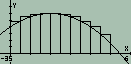 It uses upper and lower rectangles to find the areas under supplied curves. A worksheet then takes the student through the process of deducing the rules of integration.
 This aplet uses visual methods to illustrate and introduce the Poisson distribution, through the sowing of dandelion seeds into a large patch of ground, which is then broken up into unit squares.
 Explore patterns and symmetry by ordering pairs of digits from the decimal expansion of certain fractions that have periodic decimals.
 Explore points, slopes and equations of lines that enclose the figures. It is also possible for the student to investigate the piecewise functions that would create the exact drawing.
 Explore relationships among the different data to predict the percent of iron in a given sample.
 Symbolically factor second degree polynomials in the form Ax^2+Bx+C.
 Determine an approximation for the golden mean using the ratio of width to length of the sides of the golden rectangles.
 3D plotting program to display and investigate graphs of the form z=f(x,y). These are expressed as wireframe surfaces, in 3D space. The process of plotting is very slow but the results are excellent.
 A copy of the Function aplet with a vast number of extra features added via an amended VIEWS menu
 Write the equation of a rational function given horizontal and vertical asymptotes and a root.
 Write the equation of a line in slope-intercept form when given two points.
 This aplet provides simple drill practice for students learning the laws of indices, with the option of including negative powers. It presents students with practice problems in correct mathematical layout and then allows them to enter the simplified answer. There are a wide variety of styles of problems. It will then tell them if they are right or wrong, offering a second chance if needed.
 This is a copy of the function aplet with the additional ability to graph inequalities (linear/non-linear) for F1, F2 and F3(X). These can be overlaid to show intersections or unions.
 Explore inverse relations and functions. Analyze relations and functions graphically, numerically, and symbolically.
 Solve oblique triangles by applying the laws of sines.
 Apply the laws of exponents to multiply and divide monomials and to raise a monomial to a power.
 An aplet similar to the Quadratic and Trig Explorers (but not as fast) which allows the student to explore linear graphs. The equation of the graph is displayed at the top left corner of the screen and the student can change the gradient and y-intercept using the arrow keys. Intercepts are shown on the screen.
 The student nominates what they think is the line of best fit for a set of bivariate data. They can then adjust the line interactively, seeing the effect on the sum of squares of residuals.
 Graphically solve a linear inequality.
 This aplet visually solves linear programming problems, finding the vertices of the feasible region and the max/min of an objective function. The final stage of finding the vertices is a bit slow but the result is very impressive. It's a wonderful tool for teachers marking test papers - it lets you easily check whether a student's feasible region is correct if they have their constraints wrong. That's why I originally wrote it: sheer frustration after the 20th paper that had to be reworked from scratch to assign part marks.
 School activity designed to investigate the visual representation of the iterative process, and the effects on the iterative process of choosing "unstable" initial values.
 Simplify expressions using the order of operations.
 Write the equation of a line parallel or perpendicular to a given line through a given point.
 Write ratios that will solve problems of the form A is B% of C.
 Explore the four different parameters that effect the graph of y=Asin(BX+C)+D and/or y=Acos(BX+C)+D, and will be able to analyze these symbolically and graphically.
 Investigate the parameter C to see how it effects the functions y = sin(x+C), y = cos(x+C), y = tan(x+C), y = sec(x+C), y = csc(x+C), y = cot(x+C).
 School activity to teach a student to define and plot 2 piece, 3 piece or 4 piece piecewise-defined functions.
 Recognize and name the coordinates of points.
 Graph polar equations and be able to analyze these symbolically and graphically.
 An essential tool for any student going into an exam which involves probability functions. This is two copies of the Solve aplet with equations pre-entered for Discrete and Continuous probability density functions respectively. Covers the Binomial distribution (individual and cumulative), the Poisson distribution (individual and cumulative), the Exponential function, the Normal distribution, plus more.
 Determine the nature of the roots, predict how many times, if any, the graph of a parabola will cross the x-axis, and find the solution(s).
 Investigate the effects of changing A, H, and K in the vertex form of a quadratic function. Analyze the effect of these parameters symbolically and graphically.
 Very well written HP 38G Aplet. This allows students to investigate the behavior of the graph of y=a(x+h)2+v as the values of a, h and v change. This can be done both by manipulating the equation and seeing the change in the graph, and by manipulating the graph and seeing the change in the equation.
 This is an aplet which lets you explore the relationship between the focus and the directrix of a quadratic equation/graph.
 Investigate rational functions and the asymptotes associated with the function.
 Reflect graphs of functions about the y-axis, x-axis, origin, and the line y=x.
 Compute residual values and display their graph as another way to determine how good the regression equation fits the data.
 School activity designed to investigate the use of elementary row operations in the reduction and/or solution of a 3 by 3 system of linear equations expressed as an augmented matrix.
 School activity designed to simulate sets of observations on various discrete and continuous random variables. These can be used in test problems or exercises, or as aids in teaching the topic of random variables.
 School activity designed to investigate the definitions of sine, cosine and tangent on the Unit circle. These can be used in test problems or exercises, or as aids in teaching the topic of random variables.
 School activity designed to investigate the production of a field of slopes from a derivative function stored in F1(X), and the drawing of multiple possible integrals given starting points (x,y).
 Evaluate expressions when given values for the variables.
 School activity designed to investigate a problem in optimization where they are required to maximize the volume by manipulating a single variable.
 School activity designed to investigate the change in the gradient of a tangent line as the point of tangency moves along the function.
 This is a collection of small programs you can type in yourself or download. They perform a multitude of small tasks, some that are so easy you'll wonder why I wrote a program for them, some that are really cool. Separated into two parts, because there are too many programs to fit all in the 38's memory at once. Mostly math programs, for numeric, trigonometric, complex, linear, and cubic calculations, plus probability, matrix, finance, statistics, and more.
 School activity designed to easily and quickly analyze Time Series style data, by calculating moving averages (3, 4 & 5 point), seasonal residuals, trend lines and seasonally adjusted data. It more a working tool, rather than an investigative tool.
 This is an easy adaption of the Parametric aplet which allows the student to investigate geometric transformations using 2x2 matrices. It is a fantastic teaching tool - my class deduced all the basic 2x2 transformation matrices for themselves in less than an hour.
 Very well written HP 38G Aplet. This allows students to investigate the behavior of the graph of y=a sin(bx+c)+d as the values of a, b, c and d change. This can be done both by manipulating the equation and seeing the change in the graph, and by manipulating the graph and seeing the change in the equation.
 School activity designed to investigate the relationship between the position, velocity and acceleration vectors for functions defined in the form (x(t),y(t)).